

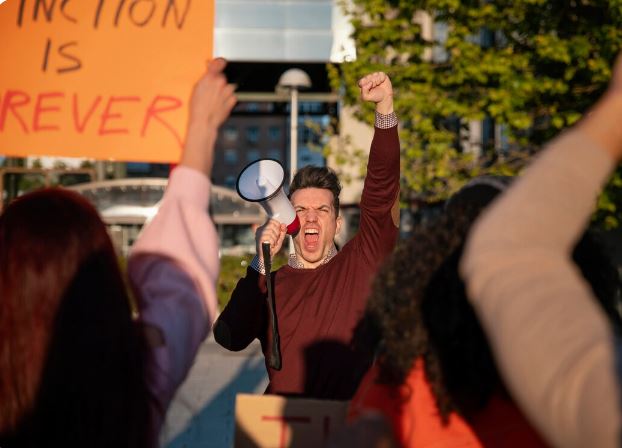
There were no fireworks to start the first day of the Conservative Party Conference in Manchester. It started with a quiet kind of resolve, similar to what you might experience while witnessing an ancient ship attempting to fix its sails while still at sea.
Kemi Badenoch entered the stage with both burdens and aspirations. She began by promising a return to “proper conservatism,” national pride, and fiscal restraint. Though not boisterous, the applause was genuine. A few delegates gave cautious nods of approval. She appeared to be being measured by others, who questioned not only whether she had the right ideas but also whether she could bring them to shore.
| Item | Detail |
|---|---|
| Seats After 2024 Election | 121 (historic low for the party) |
| New Leader | Kemi Badenoch, elected November 2, 2024 |
| Strategy Focus | Tax cuts, stricter immigration, cultural conservatism |
| Main Electoral Threat | Reform UK – attracted 26% of former Tory voters |
| Current Polling (Jan 2026) | Conservatives: 18%, Labour: 18%, Reform UK: 26% |
| Internal Party Dynamics | Deep ideological split: shift right vs. calls to return to centre |
| Conference Mood (Oct 2025) | Optimistic messaging, but sparse attendance and visible internal doubt |
In July 2024, the party suffered a crushing defeat, losing all but 121 seats. Since then, the political landscape has changed significantly. What was once thought to be a party too big to fail is now posing important questions about identity, purpose, and most importantly, trust.
There has been an unmistakable shift to the right. The policy slate has become leaner, louder, and more unyielding, ranging from eliminating the carbon tax to withdrawing support for the European Convention on Human Rights. These actions are intended to address a challenge from Reform UK that the party did not anticipate facing a few years ago.
These days, the biggest threat in Conservative strategy rooms is not Labour. It’s Reform. The party that succeeded Nigel Farage has lost support by reminding disenchanted voters of what the Tories once were, rather than by presenting anything novel. For the 26 percent of former Conservative voters who switched to Reform, principle was more important than perfection.
The party is experiencing what appears to be an ideological struggle as a result of this reality. Moderates contend that the party’s base will be reduced if it moves further to the right. Hardliners maintain that the only way forward is to recapture authenticity. Over coffee, I overheard a Midlands MP remark, “You have to try, but you can’t out-Farage Farage.” With a weary smile, it was said.
Badenoch’s current endeavor is especially bold. She is attempting to mend a broken base while delivering bold policy—balancing traditional allegiances with a contemporary message. It’s politically astute in part. Offering young workers a £5,000 “First Job Bonus” and eliminating stamp duty on primary residences are practical incentives with widespread appeal rather than merely ideological gestures.
However, the more fundamental query still stands: are voters still paying attention?
The party’s supporters were feeling a mixture of nervous calculation and cautious optimism during the 2025 conference. During main stage speeches, especially when discussing net-zero rollbacks and immigration pledges, I saw a number of empty chairs. Those who remained applauded, but it was noticeably less than in previous years. The party seemed to be continuing to perform for an audience that might have already dispersed.
However, it’s critical to understand what the Conservatives are attempting to accomplish. They are trying to reshape their image around the concept of resilience rather than just licking wounds. The one area where polling indicates they are still competitive is economic credibility. That might not seem like much, but even narrow margins can have enormous value in contemporary politics.
The leadership is aware of this. Economic reform, which Badenoch and Shadow Chancellor Mel Stride made a major theme, flows “through this conference like the words in a stick of Blackpool rock,” as she put it. It’s a memorable and clever line that connects tradition and purpose.
The Conservatives are presenting themselves as the responsible, economical, and forward-thinking adults in the room by emphasizing tax cuts and targeted spending reductions. Reduced red tape, increased enterprise, and a clean break from the financial chaos of the Truss era are the clear promises. Stride even made sure to publicly disassociate himself from that notorious mini-budget, describing it as an error that “will never, ever happen again.”
However, that assurance is limited. Having MPs who support Truss in important positions makes it more difficult to make a strong case for a clean break. In the meantime, Reform UK keeps gaining support and confidence in addition to polling numbers. Voters who feel betrayed by polished politics are increasingly drawn to their direct, emotive appeal.
During a law and order policy panel, a Kentish local councillor once raised his hand and questioned whether the party really knew what it was up against. He stated, “It’s not just about policies.” It has to do with energy. Reform possesses it. Do we?
His remark lingered longer than anyone had anticipated.
I was silently nodding in agreement with him.
The Conservative Party does have some tools, though. If properly conveyed, its economic platform can provide a sense of stability that Reform and Labour both lack in various ways. According to polls, voters are still dubious about Labour’s tax proposals and doubtful of Reform’s capacity to lead. If Badenoch can maintain his concentration, that presents a significant opportunity.
Time, however, is not on her side.
In May 2026, there will be mayoral and local elections, so she needs to demonstrate real momentum. A slight increase in council victories, a decline in Reform’s polling—any quantifiable evidence that her approach is working. If not, there will be more noise about her leadership. Prior to the next general election, a pre-conference survey revealed that almost half of Tory members do not want her.
It is reasonable to assume that the party still has something to offer in spite of everything. Young candidates who speak with purpose and clarity are emerging. Some MPs who prioritize their communities are reestablishing genuine connections with their constituents. Additionally, there is still the quiet but steadfast belief that the party can change without losing its essence.
There is more to the Conservatives’ future than just catchphrases and speeches. Regaining the interest and, eventually, the confidence of a public that has moved on is the goal. Rebuilding rarely proceeds in a straight line and takes time. However, even a party pushed to the brink can find a way back if they have enough patience, bravery, and clarity.
