

These days, there’s a peculiar silence in Islamabad, the kind that falls when something truly significant is about to occur. Ten thousand security guards were stationed along streets that are normally crowded with motorcycles and chai vendors. A two-day public holiday was announced ahead of negotiations that are not entirely certain will go as planned. Nevertheless, the city has almost defiantly dressed up for the event. It’s the kind of information that indicates a change in the way the world selects its diplomatic locations.
For the majority of the previous 20 years, Pakistan was primarily associated with issues in Washington, such as terrorism, instability, conflict over Afghanistan, and an economy that was on the verge of defaulting on its debt two years ago. Most analysts would have considered it slightly ridiculous that Islamabad would become the venue for the first high-level direct interaction between the United States and Iran since 1979. And yet, here we are. The conversations took place. Despite its fragility, the ceasefire lasted long enough for tankers to resume passing through the Strait of Hormuz. Diplomats feel that something quietly historic has just occurred and that the nation that caused it is still unsure of how to handle the attention.
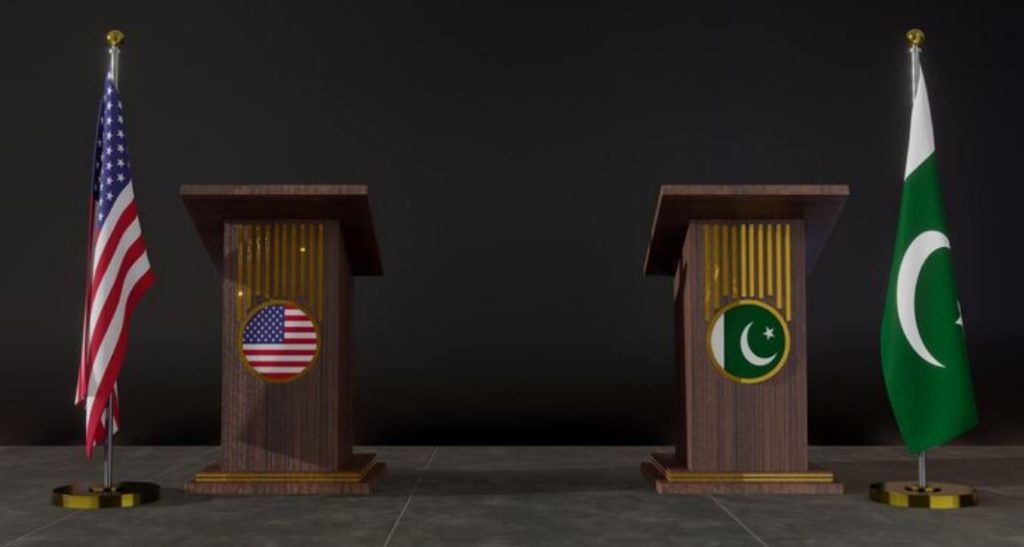
The creators of all of this are a strange duo. President Trump has reportedly started referring to Pakistan’s army chief, Field Marshal Asim Munir, as his “favourite field marshal,” and Prime Minister Shehbaz Sharif, who has spent his term primarily attempting to prevent the nation’s economy from collapsing. The connection between Munir and Trump didn’t just happen. It was meticulously constructed over several months, starting with the transfer of CIA intelligence to the purported mastermind of the 2021 Kabul airport bombing, a move for which Trump expressed gratitude in his first speech to Congress. Next came the $500 million investment deal in critical minerals, the Nobel Peace Prize nomination, and an agreement pertaining to the Trump family’s cryptocurrency business. Cynical? Perhaps. Effective? Without a doubt.
But Pakistan’s access to Trump’s inner circle isn’t the only thing that sets it apart. The geography is the reason. Pakistan is home to one of the largest Shia populations outside of Iran, shares a 900-kilometer border with Iran, and—most importantly—does not house US military installations. It seems insignificant, but that final detail is crucial. Tehran answered the phone for this reason. In a covert arrangement that has persisted for years, Pakistan also represents Iran’s diplomatic interests in Washington. Such parallel access is rare, and very few nations are able to host both sides in the same building with sufficient credibility.
However, prestige isn’t the only driving force. Pakistan was more severely affected by the Strait of Hormuz closure than the headlines indicated. It receives more than 85% of its crude oil via that small passage. The cost of urea, which is essential for producing fertilizer before harvest season, increased by 40%. The possibility of large returns threatened remittances from Pakistanis employed in the Gulf, which essentially maintain the balance of the nation’s current account. One analyst described the idea of a third inflamed border as a nightmare scenario, given the already hostile relationship between Afghanistan and India. Pakistan was forced into this role rather than choosing it.
Even so, there’s something almost poetic about the way this is playing out. The Nixon-Kissinger opening to China in 1971 was the result of covert diplomacy mediated by Pakistan. It’s doing it again fifty years later, with different adversaries and a different conflict, but the same instinct—that being useful to two adversaries at once is a form of power—remains. Whether the discussions will result in anything more than a pause is still up in the air. The ceasefire is precarious, there are still significant gaps between Tehran and Washington, and Islamabad’s influence is based on connections that could break down at any time. However, as of right now, the only city where both sides will be seated at the same table is one that was virtually unnoticed until very recently.
