

For many drivers, sound was the first thing they noticed instead of danger. A brand-new Mazda CX-90’s sharp, unrelenting squeal could be heard cutting through peaceful suburban streets or reverberating off parking garage walls. It initially appeared to be a small annoyance that would go away after a few hundred miles. However, the noise didn’t go away for some owners. Even after repairs, it kept coming back.
The narrative starts to change at that point. What was once an annoyance starts to seem like a pattern. Additionally, trends in the automotive industry usually point to more dire situations. In this instance, the lawsuit challenges not only the brakes but also the overall dependability of one of the most significant vehicles produced by Mazda Motor Corporation.
| Category | Details |
|---|---|
| Vehicle | Mazda CX-90 |
| Manufacturer | Mazda Motor Corporation |
| Model Years Involved | 2024–2026 |
| Issue | Alleged brake defects (squealing, premature wear) |
| Additional Concerns | Lane-Keep Assist steering behavior |
| Legal Action | Class action lawsuit filed in Virginia |
| Plaintiff | Individual CX-90 owner (representing broader group) |
| Core Claim | Defects known but not properly addressed |
| Reference | https://www.autoblog.com |
The Virginia lawsuit claims that the CX-90 has ongoing brake problems, particularly premature wear and continuous squealing under typical driving circumstances. That might not sound disastrous on paper. However, brakes are not aesthetically pleasing. They are fundamental. Drivers pick up on anything that feels a little strange.
One owner’s story sticks out, in part because it seems almost too unusual to be common. He reportedly returned the CX-90 he had bought within a day because he was dissatisfied with the car’s behavior. Then he purchased another one, which had the same model and promise, but he ran into similar problems. It’s difficult to ignore that particular detail. One car being returned is uncommon. For the same reason, returning two points to a deeper issue.
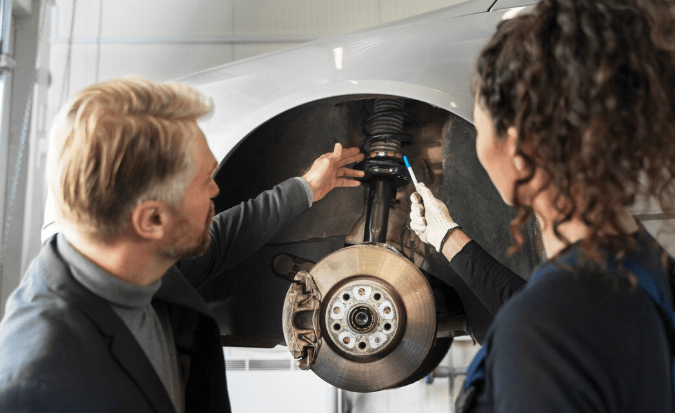
Visits to dealerships came next. Several of them. The brakes were examined, anti-squeal compounds were applied, and pads and rotors were changed by technicians. Every time, the hope was that the problem would eventually be resolved. It didn’t each time. Sometimes the sound came back almost instantly. Frustration seems to have hardened into suspicion at some point.
There is more to the lawsuit than just noise. It asserts that, rather than typical wear, the brake issues could be caused by a manufacturing or design flaw. This distinction is important, particularly from a legal standpoint. If this is the case, it implies that the problem may be systemic rather than isolated, impacting cars from various model years.
The SUV’s Lane-Keep Assist system is another layer. The complaint claims that the system may make excessively forceful steering adjustments, which occasionally work against the driver rather than gently directing the car. Although it’s a different matter, it supports the larger claim that the CX-90 might have underlying issues that are difficult to resolve.
How widespread these problems actually are is still unknown. Automakers frequently receive complaints, but not all of them indicate a more serious flaw. However, it becomes more difficult to write off complaints as isolated instances when they begin to coincide—the same symptoms, the same unsuccessful treatments. According to reports, regulators, including U.S. safety agencies, are already investigating related issues.
This has a more familiar, larger context. Modern automobiles combine sophisticated software-driven features with conventional mechanical systems, making them more complex than ever. Benefits like efficiency, safety, and comfort are brought about by this complexity, but it also creates new issues. These days, a brake system is more than just metal and friction. Sensors, algorithms, and calibration are involved. It becomes more difficult to diagnose when something goes wrong.
As this develops, it seems as though the CX-90 marks a turning point in the industry. Can you trust the fundamentals of a car that is positioned as sophisticated and modern but is confronted with questions that seem almost archaic? It’s a question that usually lingers longer than any particular flaw.
For its part, Mazda has not publicly acknowledged the allegations in the lawsuit. That’s normal. Both sides present evidence, contest presumptions, and negotiate settlements behind closed doors in legal disputes, which frequently proceed slowly. The case might end quietly, as it has in the past. It’s also possible that it will persist and raise awareness of the problem.
The situation seems more urgent to drivers. A squealing brake is a signal as well as a sound. Something is off. And confidence starts to decline when that signal continues despite repeated attempts to correct it. Not suddenly, not dramatically. Just enough to draw attention.
There’s a rhythm to these interactions—complaint, inspection, reassurance—when you watch technicians move between cars in a dealership service area. That rhythm works most of the time. Customers are satisfied when issues are resolved. However, situations like this throw off that pattern, suggesting that some problems might not fit neatly into the standard procedure.
The CX-90 lawsuit may eventually shed light on the underlying issues, such as whether the brake concerns are a real defect or something less systemic. The narrative remains in that ambiguous area between accusation and conclusion until then.
And the sharp, unrelenting, unresolved sound of those brakes still reverberates in that room.
