

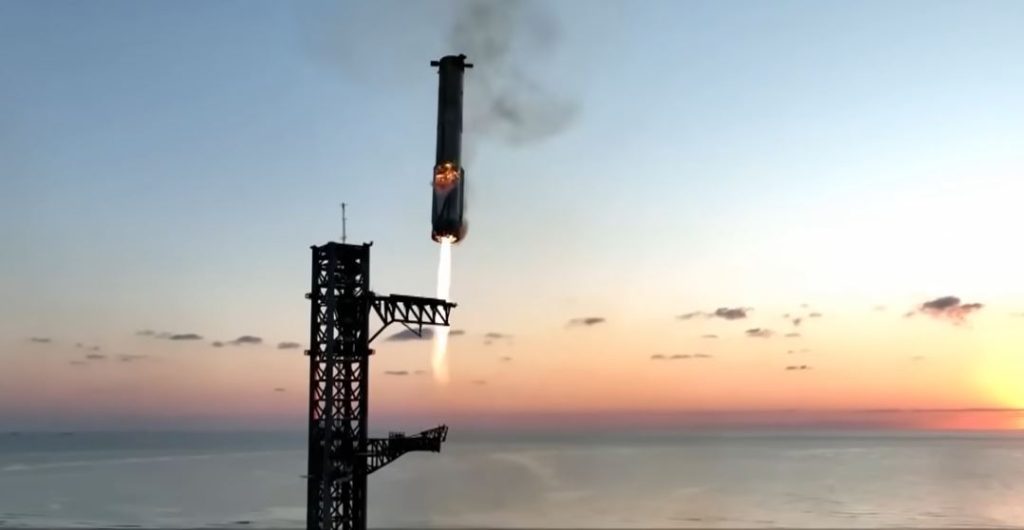
The sound of a SpaceX rocket launch is not the first thing you notice. The light is the cause. The horizon abruptly flares, a strange orange that is almost theatrical, as you stand miles away from Cape Canaveral Space Force Station. The rocket appears to be frozen for a moment, as though it is reevaluating its choice. After that, it moves. Initially, slowly. Even reluctantly. Then it climbs with a sort of silent inevitability.
The crowd falls silent for a brief period of time. They don’t know quite what to say, not because they’re told to.
Watching a Falcon 9 launch today makes it easy to forget how commonplace this has become. In 2026, SpaceX has been sending batches of Starlink satellites into orbit with a sort of industrial consistency by launching rockets every few days, sometimes every 2.3 days. Once an uncommon sight, rockets now act more like flaming freight trucks.
| Category | Details |
|---|---|
| Company Name | Space Exploration Technologies Corp. (SpaceX) |
| Founder | Elon Musk |
| Founded | 2002 |
| Headquarters | Hawthorne |
| Main Rocket | Falcon 9 |
| Major Program | Starlink |
| Launch Sites | Cape Canaveral Space Force Station, Vandenberg Space Force Base |
| Milestone | Over 10,000 Starlink satellites in orbit (2026) |
| Official Website | https://www.spacex.com |
However, routine does not equate to ordinary. The “jellyfish effect,” a phenomenon where the rocket’s exhaust plume blooms into a glowing cloud in the upper atmosphere, was discussed during a recent morning launch that took place shortly after sunrise. That day, it didn’t occur. The timing changed. The sky remained unchanging. Nevertheless, people arrived, waiting with coffee cups in hand and folding chairs in the sand.
People don’t seem to be merely observing a launch. They are observing a system in action. Founded by Elon Musk in 2002, SpaceX has discreetly developed something that resembles a logistics machine rather than a conventional aerospace company—one that also happens to function outside of Earth. Ten years ago, the number of Starlink satellites in orbit would have seemed ridiculous. Today, the company has over 10,000 of them. It still begs the question.
Scale may be the true story here. The repetition of the rockets, not the rockets themselves. Every launch has a well-known script. Ignition. Countdown. Take off. Separation of stages. Then, almost nonchalantly, the first-stage booster reappears and touches down on a droneship in the ocean, sometimes with a playful name like “A Shortfall of Gravitas.” It’s difficult not to sense that something has changed as you watch that landing—steel legs unfolding, engine firing just long enough to slow descent. Rockets can no longer be thrown away. They return.
Nevertheless, despite all of this accuracy, there is always some degree of uncertainty. The weather is still unpredictable. There were worries about wind and cloud cover during a recent launch, with a 75% chance of favorable conditions. When you’re waiting, the remaining 25% seems bigger than it actually is. How far SpaceX can push its cadence before something—technical, environmental, or even regulatory—pushes back is still unknown.
In the meantime, these launches now serve a more useful purpose. Once a daring experiment, the Starlink system now provides services to millions of users in over 160 countries. Satellites launched in groups of 20 or 30 at a time are now able to connect farmers, isolated villages, ships at sea, and other locations that were previously beyond the reach of conventional infrastructure.
That’s the part that seems so simple to ignore. A launch appears dramatic, even cinematic, from the ground. However, the benefits it provides are frequently imperceptible. signals from the internet. streams of data. quiet connectivity.
As I watched a Falcon 9 vanish into a patch of morning clouds, the rocket first appeared as a faint streak and then vanished completely. The sound, a low rumble rolling across the water that gradually faded, persisted longer than the picture.
After that, it was over. Chairs were packed. The roads began to see traffic again. The next launch, which is only a few days away, was mentioned. It was almost informal.
Perhaps the most peculiar aspect of it all is that. Not the technology. Not the scale. However, how soon something remarkable turns into the norm. We feel as though we are in the middle of a shift, neither at the start nor the finish, as we watch this develop. Space is no longer as far away as it once was. It’s planned. controlled. repeated.
Nevertheless, there is a hint of uncertainty with every launch. A reminder that fire and gravity are always negotiating despite the rhythm and routine. You can practically hear that negotiation taking place for a few seconds as the rocket ascends.
