

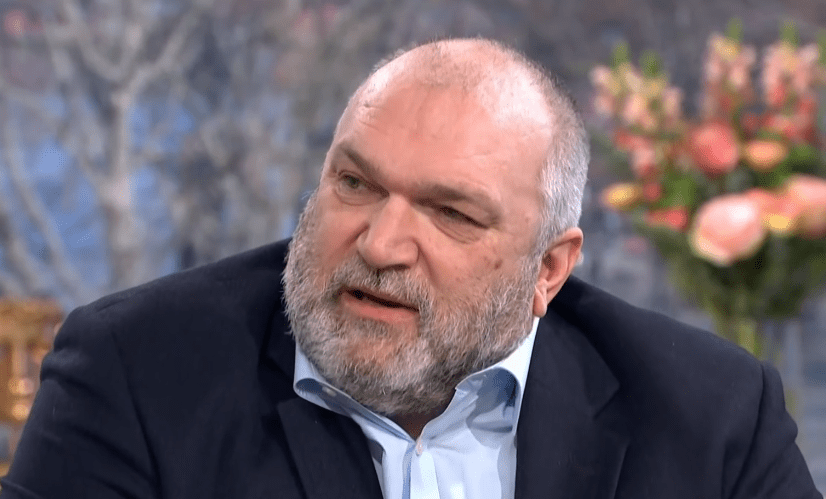
Credit: This Morning
Football was never played gently by Neil “Razor” Ruddock. His strategy was based on physical strength, astute positioning, and the kind of tough defense that made even the most daring attackers question what they were going to do next.
People who remember his significant role in top-flight football in the 1990s might be surprised to learn that, as of 2026, his net worth is between £200,000 and £500,000. It’s a remarkably modest amount for a man who has captained Premier League backlines.
| Field | Detail |
|---|---|
| Full Name | Neil “Razor” Ruddock |
| Date of Birth | May 9, 1968 |
| Profession | Former Footballer, TV Personality, Author |
| Known For | Aggressive defending, Liverpool career, reality TV appearances |
| Estimated Net Worth (2026) | £200,000 – £500,000 |
| Career Highlights | Played for Liverpool, Tottenham, West Ham, Southampton; England cap |
| External Reference | Wikipedia – Neil Ruddock |
Ruddock’s financial journey serves as a warning; it is unquestionably real, neither tragic nor triumphant. He played a pivotal role in a time when football players were paid like mid-level CEOs rather than billionaires but were still hailed as rock stars. Salaries were impressive back then, but unless they were carefully preserved, they did not change the lives of generations.
Preservation was not in Ruddock’s game plan. He acknowledged that money flowed freely and was frequently spent before it was earned. His enthusiasm for the way of life was both commendable and, looking back, unsustainable financially.
There were warning indicators by the early 2010s. He was formally declared bankrupt in 2011. By 2014, he was appearing on reality shows to make ends meet, not just for fun. Can’t Pay? We’ll Take It Away: An unforgettable appearance! revealed him contesting a dog kennel’s claim of several thousand pounds. It was the kind of moment where the man was all that remained after the myth was stripped away.
Nevertheless, Razor refused to disappear in spite of the financial collapse. Perhaps without realizing it, he changed his role to that of an entertainer. He made appearances on Celebrity Big Brother, MasterChef, I’m a Celebrity, and other shows. These performances, which were sometimes chaotic, frequently humorous, and sometimes self-deprecating, became his new stadiums. Though in a different format, audiences still desired Ruddock.
His weight turned into a new foe. He weighed more than 27 stone (nearly 380 pounds) by 2021, and medical professionals said he only had a few months to live. When a specialist informed him that he was on borrowed time, it really hit home. For someone whose life had previously revolved around achieving the highest level of physical fitness, such a statement is sobering.
He had had gastric sleeve surgery by 2022, and the outcomes were strikingly impressive. His condition quickly improved. He relaxed his breathing. His vitality came back. It was especially motivating to watch him change—not because he changed, but because he reclaimed the person he once was.
Razor transformed recovery into a platform by forming strategic alliances and working tirelessly. He started talking candidly about his health issues and urging others to get treatment before it’s too late. His relevance undoubtedly increased, even though his bank account did not.
Ruddock attributes a large portion of this improvement to his wife, Leah Newman. From being supportive to being interventionist, their relationship changed over time. Instead of watching from the sidelines, she participated in the game. Their relationship has grown to be a lifeline, demonstrating that sometimes taking responsibility for one’s actions is the most loving thing one can do.
His current income is a patchwork of media appearances, royalties from memoirs (his book Toxic was incredibly honest), and in-person appearances. He’s not living extravagantly, but he’s living well, and more significantly, he’s living intentionally.
He claimed that during a rural escape episode, a ghost whispered “hello” into his ear in one of his more recent TV moments. The supernatural now frightened the man who used to frighten assailants. Naturally, it was humorous, but it also felt vulnerable and honest.
The most notable aspect of Neil Ruddock’s journey is not what he lost, but rather what he is still rebuilding. He didn’t turn to resentment or longing. Rather, he adjusted, changed who he was, and discovered purpose outside the din of the throng.
His story has a different kind of richness, even though he may not be wealthy by football standards. It serves as a reminder that resilience and personal development can work incredibly well together to create a satisfying second act.
Ruddock is essentially still defending something, but this time it’s his future rather than a goal. What’s the best part? On his own terms, that is.
