

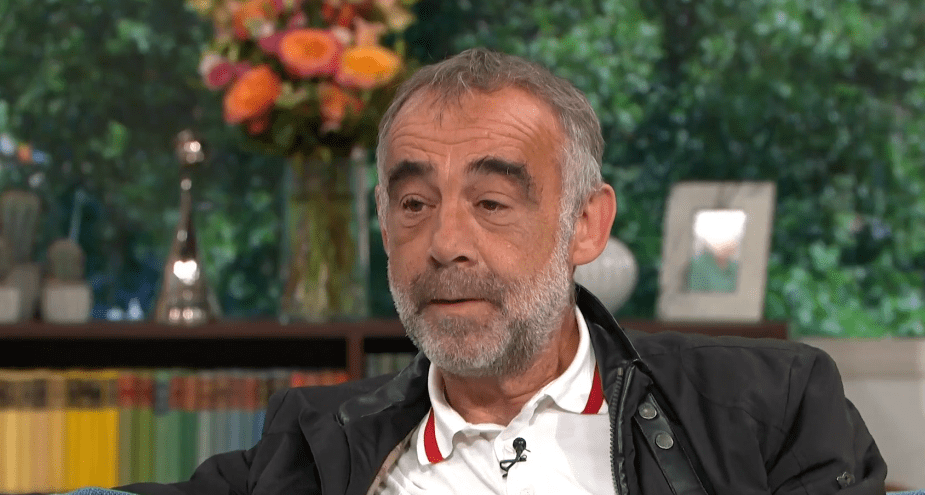
Credit: This Morning
He has been on our screens for more than 40 years, standing in that famous Weatherfield garage with a wrench in hand. Michael Le Vell, known to millions as Kevin Webster, has not only played a mechanic—he’s become one of the staples of British television itself.
But lately, it’s not just Kevin’s plot that’s drawn notice. It’s Michael’s outward change—his somewhat more fragile appearance, quieter presence, and stories of recent health challenges—that have stirred alarm and discourse.
| Detail | Description |
|---|---|
| Full Name | Michael Robert Turner (professionally known as Michael Le Vell) |
| Birthdate | 15 December 1964 |
| Known For | Kevin Webster on Coronation Street since 1983 |
| Personal Health Notes | Ongoing recovery from alcohol addiction; visible health concerns reported |
| Recent Development | In rehab earlier this year; now sober and attending regular AA meetings |
| Reference Link | WikiPedia |
In early 2025, Le Vell underwent rehab at The Priory, completing a three-week programme that addressed long-standing alcohol abuse. He was allegedly consuming up to 12 beers each night at his lowest point, which is not only risky but also extremely numbing. Since then, he’s been sober, attending Alcoholics Anonymous and, as close friends have related, feeling stronger.
In a very public life, it has been a particularly private chapter.
While Kevin’s current plotline on Coronation Street examines a testicular cancer diagnosis, many have begun to wonder whether this was art imitating life—or a cunning strategy to handle time off for rehabilitation. Either way, the storyline has given Le Vell freedom to slow down, while still showing up for an audience that has, by and large, stayed faithful.
There’s a quietness about his recent scenes. A softness that reflects not simply performance, but personal reflection.
In one instance, his character stared into the mirror following a medical fear, hand briefly trembling. It wasn’t in the script—but it landed with a realness that’s hard to mimic.
Le Vell’s journey hasn’t been easy. He has endured severe judicial examination, the glare of tabloid criticism, and a hard personal struggle with addiction. After being cleared of severe charges in 2013, he took a break from acting to start over. He returned later that year—sober, but still recuperating.
Many people are aware that maintaining sobriety is a continuous process. It’s a landscape you navigate every single day.
Michael’s colleagues at ITV have been remarkably supportive. His return has been carefully crafted by producers, who have given him compelling storylines and modified schedules to lighten the load. That kind of dedication from an employer, particularly in a high-pressure business, is particularly rare—and particularly valuable.
For viewers who grew up seeing Kevin’s calm hands mend broken cars, Michael’s quest has become something more nuanced. It’s not just about whether Kevin gets through cancer—it’s about whether the man behind the role is finding peace, stability, and purpose.
I found myself thinking about this while rewatching an old scene—Kevin talking to young Jack about persevering through fear. At the time, it was fiction. Now, it feels like Michael giving himself permission to keep going.
Fans have quietly expressed admiration for his candor regarding attending meetings, slipping, and beginning afresh. People perceive themselves in that cycle. The setbacks. The restarts. The decision—sometimes daily—not to give up.
And this is what makes his story feel uniquely human: there’s no grandiose conclusion, no histrionic triumph. Just the realism of effort. And the optimism of continuing.
Michael’s recent sobriety streak is a reminder that rehabilitation isn’t linear, but it is totally achievable. Staying clean, while maintaining a rigorous schedule and playing a character who himself is experiencing emotional hardship, is no minor achievement. It’s really commendable.
As usual, there are rumors circulating about his potential to remain on the show. For the time being, though, Michael Le Vell is working, recuperating, and remaining present—what many people seek to do following difficult seasons.
He may go eventually. Or he may remain, quietly resilient, showing up in ways that are both conspicuous and deeply understated.
What’s evident is that his story—both written and unscripted—has reached people. And of all the legacies, that may be the most lasting.
