

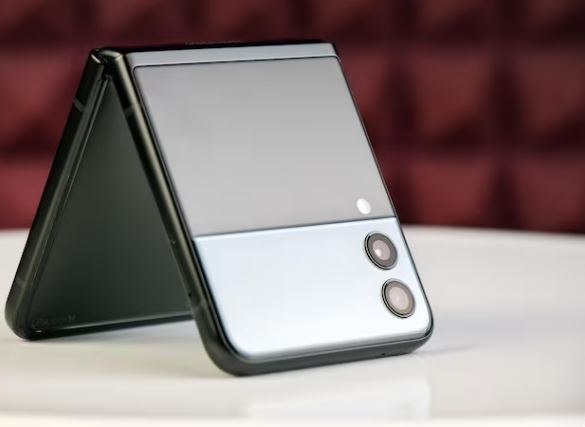
A specific type of legal document that quietly ends up in a federal courtroom in Texas has the potential to disrupt an international supply chain. Lepton Computing LLC filed a complaint last week in the Eastern District of Texas. On paper, Samsung is being sued for patent infringement over nine patents related to foldable smartphone technology. In actuality, it requests that every Galaxy Z Fold, Z Flip, and even the recently released Z TriFold be removed from American store shelves by an American court. That’s not a minor request, nor is it a minor hassle for Samsung.
According to the complaint, Lepton is an inventor who has been wronged. According to the company, it met with Samsung in 2013 and shared technical information and prototypes for a foldable phone concept it called the Lepton Flex. According to the lawsuit, Samsung took what it learned and ran with it, shipping the first Galaxy Fold in September 2019 and going on to dominate the market ever since. If you support the underdog, it’s an emotionally fulfilling story. However, that arc is significantly complicated by the actual patents Lepton is waving in court.
| Lawsuit Snapshot — Lepton Computing LLC v. Samsung Electronics | Details |
|---|---|
| Plaintiff | Lepton Computing LLC |
| Defendants | Samsung Electronics Co. and Samsung Electronics America Inc. |
| Court | US District Court for the Eastern District of Texas |
| Filing Date | April 24, 2026 |
| Patents Allegedly Infringed | Nine, covering hinge mechanisms, flexible displays, and user interface software |
| Earliest Patent Registration | June 29, 2021 |
| Founder of Lepton | Stephen Delaporte |
| Prototype Cited in Filing | “Lepton Flex” (claimed first US-developed foldable smartphone) |
| Devices Targeted | Galaxy Z Fold 3 onward, Galaxy Z Flip 3 onward, Galaxy Z TriFold |
| Reliefs Sought | Damages, ongoing royalties, treble damages, and a permanent US sales injunction |
| Software Feature Cited | App Continuity (cross-display app handoff) |
| Defendant’s Foldable Market Position | Global leader in foldable smartphone shipments per Samsung Newsroom |
| Claimed Year of Prior Disclosure to Samsung | 2013 |
June 2021 saw the registration of the first of those nine patents. Almost two years have passed since Samsung introduced its first foldable. The original Galaxy Fold and the first two Z Flip models are noticeably missing from the list of infringements because Lepton appears to be aware of the awkwardness. The case advances from the Galaxy Z Fold 3 and Z Flip 3. The filing has already drawn criticism from patent attorneys. The kind of argument that tends to falter under cross-examination is trying to persuade a judge that a 2021 invention served as the fundamental source of a 2019 product.
And there’s the question of Lepton’s true identity. Despite having a small public presence, the company is described as a “pioneering leader” in flexible display devices on LinkedIn. There isn’t much on the website. According to most accounts, the video of the Lepton Flex running Android that founder Stephen Delaporte had promised in 2021 never materialized. This fits a familiar pattern for those who closely monitor tech litigation: a small company with patents, a large corporation with substantial resources, a venue that is renowned for being supportive of plaintiffs in patent cases, and a request for treble damages based on willful infringement. Lepton isn’t inherently a “patent troll,” but the silhouette is recognizable enough that a number of commentators on Linus Tech Tips and other websites quickly came to that conclusion.
For Samsung, this implies something in between a minor annoyance and a serious issue. For years, the company has engaged in patent disputes, such as the protracted and costly dispute with Apple that resulted in a billion-dollar settlement. It doesn’t seem likely that its foldables will be permanently barred. Except for the attorneys, a settlement appears to be the cleaner solution and much more likely. The timing still hurts. The Z TriFold, which Samsung recently unveiled at CES 2026, is now available in stores to genuine excitement. The foldable category continues to be the company’s most prominent mobile story. A protracted US lawsuit casts doubt on that story, even if it results in a quiet check.
It’s difficult to ignore how frequently these suits show up right before a product line reaches its peak in terms of sales. The case will probably take years to settle, regardless of whether Lepton has a legitimate complaint from a 2013 meeting or is just using a long-game patent strategy. Samsung is going to fight. Lepton is going to press. Foldable phones will continue to sell somewhere in the middle, and consumers in Dallas, Seoul, or anywhere else will most likely be unaware of this.
