

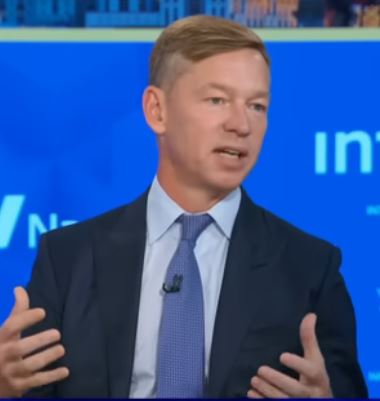
Ironically, one of the most popular videos from Chris Kempczinski’s time as CEO of McDonald’s featured a thirteen-second clip and a cautious bite that went viral. Kempczinski uploaded a video advertising the new Big Arch burger in March 2026. The small, cautious, almost clinical bite caught audiences’ attention right away, and within hours, they started making fun of it. The president of Burger King picked up a Whopper and chomped on some sauce. The president of Wendy came next. Three executives in the fast-food industry, each with a very distinct relationship to their own product. Nevertheless, Kempczinski prevailed in some way: the Big Arch reportedly exceeded sales projections, and his Instagram following increased by thirty percent. It was an odd, contemporary kind of victory.
Something fundamental about Kempczinski’s current position is captured in that episode. His estimated net worth ranges from $19 million to $45 million, depending on which source you trust and which assets you count. He is the chairman and CEO of one of the most well-known companies in the world, operating a network of over 40,000 restaurants across more than 100 countries. The range is sufficiently broad to prompt inquiries. Based on current publicly disclosed stock holdings, GuruFocus estimates the amount at about $19 million based on SEC filings. The estimate is pushed closer to $45 million by additional financial trackers that account for past compensation and share sales dating back to 2021. The typical opacity of executive wealth obscures the truth, which is most likely somewhere in the middle.
The fact that he makes money is undeniable. In recent years, his total yearly compensation package has averaged between $19.2 million and $20.5 million. It is mostly based on performance-based stock awards rather than a sizable base salary, which is approximately $1.5 million, which is nearly insufficient for someone in his position. He has made an estimated $32.8 million from the sale of over 104,000 shares of McDonald‘s stock since 2021. He still owns about 34,445 shares as of early 2026. While it steadily turns paper wealth into real money, the selling pattern is methodical and consistent, the kind of schedule executives set up to avoid accusations of timing the market.
After a career that read like a tour of prestigious American consumer brands, including Procter & Gamble, Boston Consulting Group, PepsiCo, and Kraft Foods, Kempczinski joined McDonald’s in 2015. After joining the McDonald’s global strategy team, he advanced to the position of president of the US division, which oversees about 14,000 restaurants. In November 2019, he took over as CEO after Steve Easterbrook, his predecessor, was fired due to a relationship with an employee. The situation was sudden, and Kempczinski acted swiftly to indicate a different style of leadership by speaking candidly about professionalism and culture in ways that seemed pointed in light of the situation.
There has been a genuine texture to his stewardship. After the invasion of Ukraine in 2022, he decided to remove McDonald’s from Russia, which affected 853 restaurants and about 62,000 workers. He introduced the Accelerating the Arches strategy, emphasizing drive-thrus and digital ordering as the primary growth drivers. In 2021, he also issued a public apology for sending private texts that blamed the parents of two children killed in shootings in Chicago. These comments caused real outrage and momentarily threatened to define his leadership in ways he obviously did not intend.
It’s difficult to ignore the fact that, despite being substantial by most standards, Kempczinski’s wealth appears modest in comparison to what one might anticipate from someone in charge of a business with a market capitalization in the hundreds of billions. His wealth seems to be still mostly a work in progress, building up gradually through yearly pay cycles, stock awards that vest on time, and shares that are sold in tranches. Whether that changes dramatically in the coming years will depend, at least in part, on McDonald’s ability to continue expanding in a time of growing food prices, changing consumer preferences, and an increasingly competitive market.
