

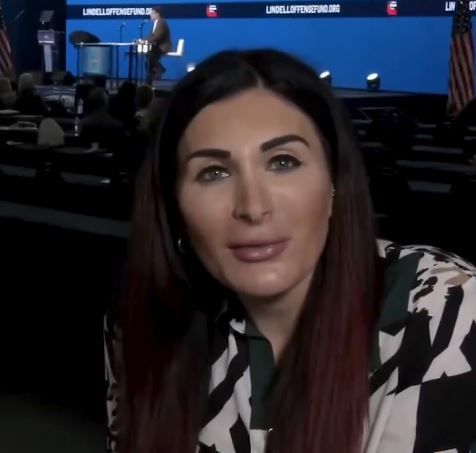
When a judge actually reads the transcript, it’s difficult to ignore how quickly these things fall apart. In a federal courtroom in Ocala, Laura Loomer’s $150 million defamation lawsuit against Bill Maher and HBO collapsed last Wednesday. The decision reads more like a bench shrug than a legal earthquake. Maher and the network were granted summary judgment by Clinton appointee Judge James S. Moody Jr., who concluded that a reasonable viewer would have realized the comedian was making a joke. failing to provide a fact. not leveling a charge. A joke.
In case anyone missed it, the setup began on September 13, 2024, when Maher speculated on “Real Time” about the potential sexual partner of President Trump. Then he landed on Loomer almost carelessly. He cited the 9/11 memorial, the airplane appearances, and the peculiar thermal proximity that the media had been discussing for weeks. “I think it might be Laura Loomer,” he replied. The following week’s program included a segment titled “24 Things You Didn’t Know About Laura Loomer.” Some found it sharp, while others found it tasteless. In any case, it was obviously humorous.
| Laura Loomer v. Bill Maher & HBO – Quick Reference | |
|---|---|
| Case Name | Loomer v. Maher, 5:24-cv-00625 |
| Court | U.S. District Court, Middle District of Florida (Ocala) |
| Presiding Judge | James S. Moody Jr. (Clinton appointee) |
| Date Filed | November 18, 2024 |
| Date Dismissed | April 22, 2026 |
| Plaintiff | Laura Loomer, 31, far-right activist and podcaster |
| Defendants | Bill Maher (host of “Real Time”) and HBO |
| Damages Sought | $150 million |
| Plaintiff’s Counsel | Larry Klayman, founder of Judicial Watch (now suspended from the Florida bar for two years) |
| Origin of Dispute | Maher’s September 13, 2024 broadcast joking about Loomer and President Donald Trump |
| Legal Standard Applied | Actual malice — the First Amendment bar for public figures |
| Outcome | Summary judgment granted to defendants; case dismissed |
| Appeal Status | Loomer has vowed to appeal to the Eleventh Circuit |
That’s not how Loomer saw it. She filed a lawsuit within two months, claiming Maher had maliciously and falsely accused her of having an affair with the president. Reading her complaint gives me the impression that she really thought the joke had hurt her. Maybe standing. Access. The type of money she exchanges. However, according to her own deposition testimony, none of those losses were evident. In 2024, her income increased. Trump continued to extend invitations to her. She still enters the White House with the effortless familiarity of someone whose allegiance has never been questioned.
It was an important detail. Judge Moody pointed out, rather dryly, that Loomer had not produced an expert witness, had not been able to link the broadcast to any specific financial harm, and had failed to find a single person who genuinely believed Maher’s insinuation. For public figures, defamation laws are harsh in this regard. Loomer, who has spent years building the loudest possible profile, was always going to be treated as a public figure, and the bar of actual malice exists specifically to prevent cases like this from clogging the courts.
The actual proceedings became bizarre. At one point, depositions allegedly veered into right-wing conspiracy theories, leading Maher to inquire, “Is this the way the law works?” The judge was instructed to receive letters of apology from both attorneys. Klayman, the founder of Judicial Watch and Loomer’s lawyer, was suspended from the Florida bar for two years; his D.C. license was already revoked. As you watch this develop, you can’t help but wonder how much of the case was performance and how much was strategy. Perhaps both. Perhaps that’s the idea.
Loomer declared the decision to be “totally dishonest and misogynistic” and pledged to file an appeal. She will require new legal advice. Although the doctrine in this case is sufficiently established to make a reversal seem improbable, the Eleventh Circuit may take it up. Reading the ruling gives the impression that the court understood exactly what was being requested—that is, to punish a comedian for being a comedian. Even sympathetic judges often object to that.
The tiny, quiet thing that frequently follows these cases is what’s left. A bit late at night. a legal action. a docket number. And a gentle reminder from the Middle District of Florida that the First Amendment is still more powerful than a joke.
