

Chinese diplomatic statements currently exhibit a certain level of silence. When you read Xi Jinping’s phone conversation with Mohammed bin Salman last week, it almost seems dull: normal passage through the Strait of Hormuz, political means, and support for peace. However, if you’ve been observing Beijing’s actions since the war began on February 28, you begin to realize that the point is boredom. In contrast to Donald Trump’s social media posts about “winning a War, BY A LOT,” Xi’s team is merely working the phones. holding meetings. waiting.
Depending on which analyst you believe, China purchases between 80 and 90 percent of Iran’s oil, making it the country’s largest consumer. Tehran’s government remains solvent under sanctions thanks only to this trade. Beijing is simultaneously hosting the Crown Prince of Abu Dhabi, working with Pakistan on a peace plan, and discreetly assuring Gulf capitals that their investments in power grids, desalination plants, and electric vehicle markets are secure. It appears that everyone is a friend. even one another’s adversaries.
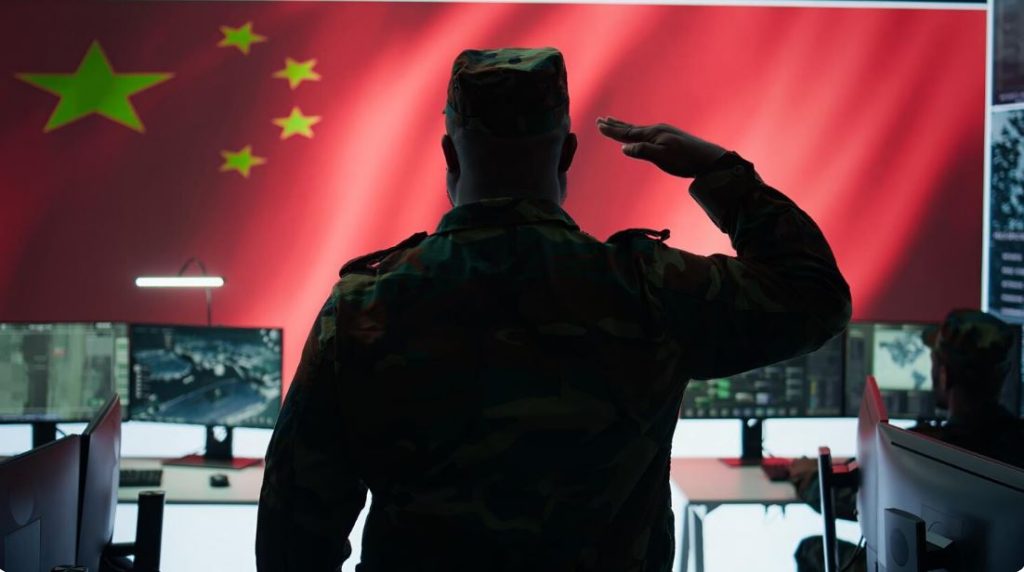
It’s difficult to ignore how this differs from the American method. Washington shows up with ultimatums and aircraft carriers. Beijing shows up with a readout. Gedaliah Afterman, a Tel Aviv analyst, expressed it in a way that resonated with me: China benefits by waiting, observing, and letting the Americans handle the mess rather than by making bold moves. It has an almost feline, almost patient quality.
| China’s Iran War Strategy — At a Glance | Details |
|---|---|
| Primary Actor | People’s Republic of China, led by President Xi Jinping |
| Relationship with Iran | Comprehensive Strategic Partnership (signed 2021, 25-year term) |
| Share of Iranian Oil Exports Bought by China | Roughly 80–90 percent |
| Key Diplomatic Moves (2026) | 26 phone calls by Foreign Minister Wang Yi between Feb 28 and April 8; joint five-point peace plan with Pakistan |
| Regional Partners Balanced | Saudi Arabia, UAE, Qatar, Israel, Iran — see policy analysis from Chatham House |
| Strait of Hormuz Position | Publicly called for reopening and “normal passage” |
| Middle East Share of China’s Crude Imports | Over 40 percent |
| Major Infrastructure Interests | Power Construction Corporation projects in Saudi Arabia, UAE, Oman, Iraq |
| UN Security Council Stance | Vetoed resolution on coordinated action to reopen Strait of Hormuz |
| Export Growth to Middle East (2025) | Nearly twice the rate of exports to the rest of the world |
A lot is explained by economics. The Middle East provides more than 40% of China’s crude oil. Its factories, export machinery, and already precarious domestic recovery would all be destroyed by a protracted energy shock. For selfish reasons rather than moral ones, Xi does not want this conflict to worsen. Businesses benefit from peace. Without any decoration, that is the entire philosophy.
It would be dishonest to ignore the darker side, though. Chinese ports may have covertly loaded Iranian ships with sodium perchlorate, a precursor to solid rocket fuel, according to reports from the U.S.-China Economic and Security Review Commission. Iranian drones found in Ukraine continue to contain Chinese components. In 2021, Beijing granted Tehran complete military access to the BeiDou satellite system. Therefore, the term “noninterference,” when used by Chinese diplomats, has some ambiguity. Yes, there is noninterference, but not none at all.
Western analysts believe that Beijing and Moscow are playing parallel games, while Russia is playing a cruder hand. In order to keep prices reasonable, the Trump administration even lifted sanctions on Russian oil, which is essentially a windfall for the Kremlin. As you watch this play out, it seems as though Beijing and Moscow are the unintentional beneficiaries of the war the United States is waging.
The low cost of China’s strategy is what makes it intriguing, and depending on your political stance, perhaps even admirable. Not a soldier. No strikes. Just phone conversations, declarations, and the enduring patience of a nation that recalls the 2000s, when China quietly prevailed in the Middle East without engaging in combat while the United States spent twenty years fighting without success.
It’s still unclear if this delicate balance will continue into the next stage of the conflict. Beijing could be forced off the fence by a real blockade, a more severe escalation, or a collapse of Iranian oil flows. For the time being, however, Xi appears happy to let Washington run its course while he stealthily collects the dividends. It is not an ostentatious tactic. It might be the most intelligent person in the room.
