

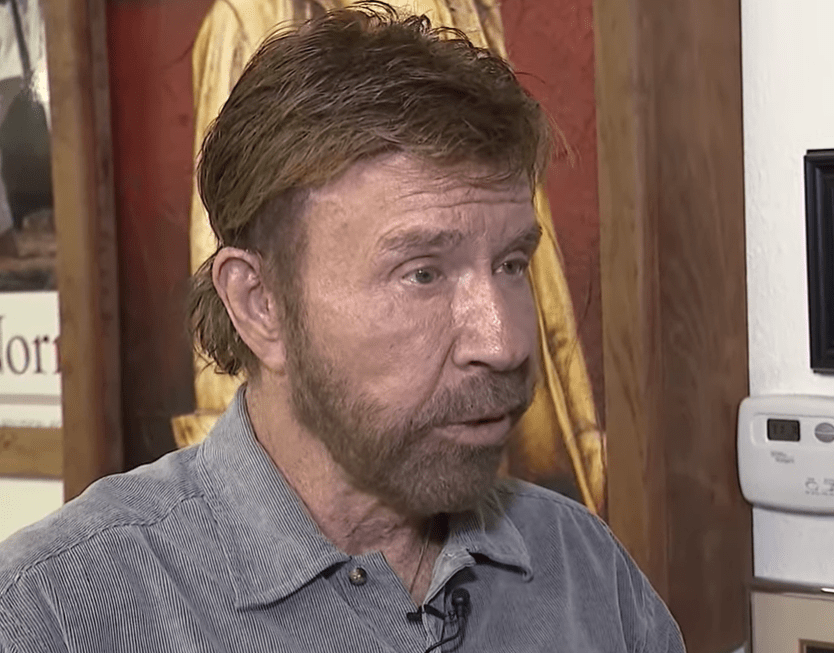
There’s something oddly fitting about the number attached to Chuck Norris in 2026. Seventy million dollars. Not a billion, not even close to the stratospheric wealth of today’s streaming-era stars. And yet, it feels… earned in a way that’s harder to quantify.
For decades, Norris existed in a strange cultural space — somewhere between a working actor, a martial arts purist, and, eventually, a walking internet punchline. Watching his career unfold over time, there’s a sense that the money followed the discipline, not the other way around. That alone makes his net worth story different.
| Category | Details |
|---|---|
| Full Name | Carlos Ray Norris |
| Date of Birth | March 10, 1940 |
| Age at Death | 86 |
| Birthplace | Ryan, Oklahoma, USA |
| Nationality | American |
| Profession | Martial Artist, Actor, Producer |
| Known For | Walker, Texas Ranger |
| Net Worth (2026) | ~$70 Million |
| Breakthrough Role | Opposite Bruce Lee in The Way of the Dragon |
| Business Ventures | Karate schools, endorsements, CForce Bottling |
| Charity | Kickstart Kids Foundation |
| Reference | https://www.celebritynetworth.com |
The early years weren’t glamorous. In fact, they were almost stubbornly modest. Norris reportedly earned just $10,000 for his first film in the mid-1970s. It’s hard not to picture him then — stepping onto dusty sets, still more comfortable in a dojo than under hot studio lights. Hollywood didn’t quite know what to do with him at first. But audiences did.
By the late 1970s and into the 1980s, Norris carved out a niche that felt distinctly his own. Films like Good Guys Wear Black and The Delta Force weren’t just action movies; they were part of a broader American mood — tough, direct, uncomplicated. There’s a sense that these roles didn’t just build his fame; they quietly built his financial foundation, one paycheck at a time.
Still, the real shift — financially speaking — came with television. When Walker, Texas Ranger arrived in 1993, it didn’t feel revolutionary at first. Another crime show. Another stoic lawman. But over time, it became something more durable. The kind of show that plays in the background of American living rooms for years, then decades. And that kind of longevity tends to generate serious money.
Norris reportedly earned around $375,000 per episode. Multiply that across more than 200 episodes, and the numbers begin to look substantial. But what’s more interesting is what came later — the syndication, the licensing, the long tail of television economics that many actors never fully tap into.
There’s also that lawsuit. It lingers as one of the more revealing moments in his financial story. Norris claimed he was owed over $30 million in profits from the show, arguing that the network had structured deals in ways that limited his share. The case eventually settled quietly. No dramatic courtroom finish, no public victory lap. Still, it raises questions. Was his net worth higher than we think? Possibly.
Beyond acting, Norris moved in ways that suggest careful thinking rather than flashy ambition. He invested in businesses, including a water company tied to land he owned in Texas. He endorsed brands, sometimes unexpectedly — appearing in commercials that felt almost self-aware. It’s possible that these quieter revenue streams, often overlooked, played a larger role than his film salaries ever did.
Then there’s the meme phenomenon. It sounds trivial, but it isn’t. By the mid-2000s, “Chuck Norris facts” were everywhere. Absurd, exaggerated, often ridiculous — but undeniably effective in keeping his name alive. There’s a feeling that this unexpected second life in internet culture extended his earning power in subtle ways. More visibility, more brand value, more opportunities.
And yet, standing on a beach in Hawaii — where Norris reportedly spent time later in life — it’s easy to imagine a different kind of wealth. Not just financial, but personal. A slower pace. A quieter presence. The kind of life that doesn’t show up on balance sheets.
His $70 million fortune, while significant, doesn’t quite capture the full picture. It reflects a career built steadily, sometimes stubbornly, across five decades. No sudden spikes. No overnight reinventions. Just consistent work, evolving with the industry without ever fully chasing it.
It’s still unclear how his legacy will settle in the years ahead. Action stars come and go, often replaced by younger, faster, louder versions. But Norris feels different. Less polished, maybe. More grounded.
And perhaps that’s the point. Watching his story from a distance, there’s a sense that the money was never the headline — even if, in the end, it became part of it.
