

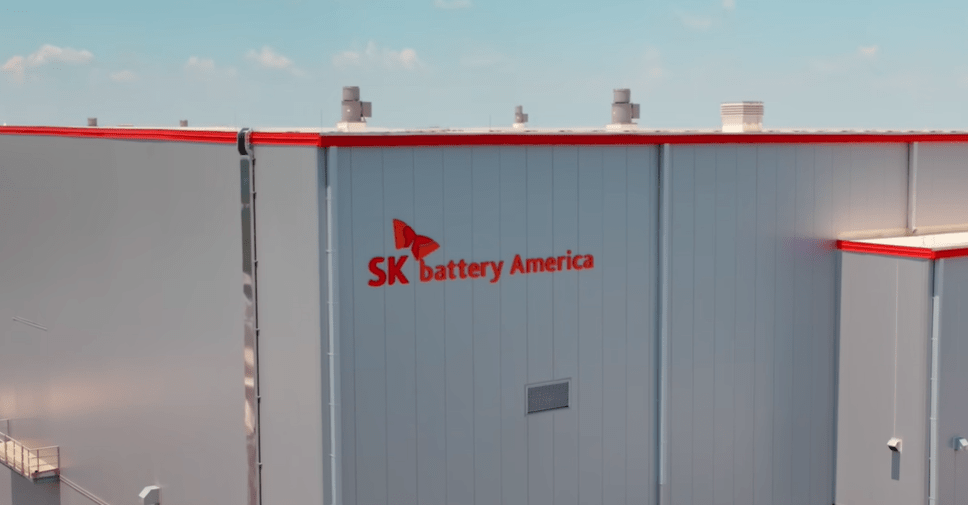
Along Interstate 85, the long silver buildings of SK Battery America reflect sunlight like enormous mirrors on most mornings in Commerce, Georgia. The building represented something greater than a factory for many years. It was a part of a national wager on electric cars, where executives spoke boldly about the future of transportation, and politicians cut ribbons.
Early in March, that mood suddenly changed. A small town accustomed to hearing about expansion plans was shocked by the news that nearly 1,000 workers—958, to be exact—were losing their jobs. By the end of the week, production lines that once buzzed with optimism felt noticeably quieter. Some employees carried cardboard boxes as they left the parking lot; such images usually stick in people’s minds long after the news has faded.
SK Battery Layoffs: What Happened at the Georgia EV Battery Plant?
| Category | Details |
|---|---|
| Company Name | SK Battery America |
| Parent Company | SK On (South Korea) |
| Industry | Electric Vehicle Battery Manufacturing |
| Headquarters (U.S.) | Commerce, Georgia, United States |
| Key Product | Nickel-Cobalt-Manganese Lithium-ion EV Batteries |
| Employees Before Layoffs | 2,566 |
| Jobs Cut | 958 workers |
| Workforce After Layoffs | ~1,600 |
| Primary Customers | Major automakers including Ford |
| Reference Website | https://www.sk.com |
The layoffs at SK Battery America result in a nearly one-third reduction in the facility’s workforce, from about 2,566 to about 1,600 workers. According to the company, market conditions compelled the choice. Although that explanation is technically correct, it doesn’t adequately convey the tense situation that the electric vehicle industry appears to be in right now.
The EV narrative appeared to be unstoppable for a while. To meet the growing demand for batteries, SK was discussing hiring hundreds more workers in Georgia just two years ago. In an effort to lessen dependency on Asia, the plant has emerged as one of the most prominent examples of America’s efforts to establish a domestic battery supply chain. Every day, trucks loaded with raw materials arrived, and rows of completed battery packs made their way to assembly lines used by automakers.
It seems that the momentum has now slowed, and not only at SK.
Sales of electric vehicles have not increased as quickly as many analysts anticipated, even though they are still rising in some areas. Automakers are changing their tactics, sometimes significantly. One of SK’s major clients, Ford Motor Company, recently changed its electrification plans to focus on hybrids and smaller EV models. The change even resulted in an astounding $19.5 billion write-down.
As these choices are made, it’s difficult to ignore the industry’s general recalibration. Battery factories are costly businesses. For their scale to be justified, they need consistent demand. The supply chain is swiftly affected when automakers begin to hesitate, postponing the introduction of electric vehicles or shifting their focus to hybrid vehicles. Battery manufacturers are the first to notice.
Layoffs resulted from those ripples in Commerce. According to company filings submitted under the Worker Adjustment and Retraining Notification (WARN) Act, affected employees will continue to receive pay and benefits for 60 days. Although a law firm has stated it is examining whether the necessary notice was given correctly, company representatives claim the action complies with federal regulations.
Layoffs of this magnitude frequently give rise to these legal issues. However, the more pressing issue in Georgia seems more pragmatic than procedural: what will happen to the hundreds of workers who are suddenly looking for work in an area that had grown dependent on the plant’s consistent employment?
The parking lots outside the building are still spacious and neat. The factory itself continues to produce cutting-edge lithium-ion battery cells made of manganese, nickel, and cobalt. However, the atmosphere seems different now—a little more circumspect.
Executives at the company maintain that the long-term goal remains the same. According to public statements, SK Battery America remains dedicated to developing a robust battery supply chain in the United States. It is exploring new markets, including battery energy storage systems for grid stabilization and power backup. These systems are becoming increasingly necessary for data centers and renewable energy projects, which could provide a different source of demand if sales of electric vehicles remain uneven.
It’s unclear if that change will completely replace the decline in EV demand. Analysts and investors seem to be at odds. Some people think that the current slowdown is only a pause following years of rapid growth. Others believe that the EV market is beginning to grow more slowly than policymakers had anticipated.
According to history, the auto industry appears to move in cycles. Once considered a transitional technology, hybrid cars are now receiving more attention. Automakers appear to believe that consumers still desire electrification, albeit perhaps not the all-electric future advertised a few years ago.
Those strategic discussions most likely seem far away to employees in Commerce, Georgia.
What they witnessed was more straightforward and immediate: a factory that had previously assured stability abruptly reduced its workforce. As things develop, there’s a feeling that this could be an early turning point in the American EV experiment—not its end, but possibly the end of its most promising phase.
The factory’s metallic walls still stretch across the Georgian landscape, standing next to the highway. However, the narrative within those walls appears more intricate than before.
