

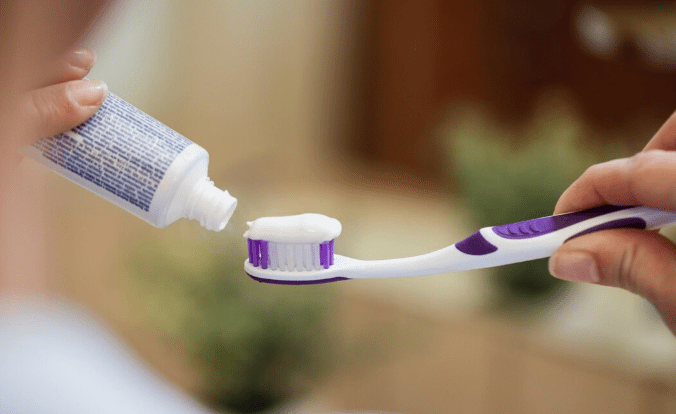
It is rare for a toothbrush next to a tiny bathroom sink to raise suspicions. A cartoon character grinning from the toothpaste tube, a parent squeezing a ribbon onto a child’s brush, and maybe a strawberry or watermelon flavor promising to make brushing less of a chore are the typical morning scenes in family homes. Colgate products have dominated that quiet area of household life for decades. It appears that the Colgate children’s toothpaste lawsuit has garnered a lot of attention because of this familiarity.
Two customers filed a class action complaint against Colgate-Palmolive in 2025, sparking the start of the legal battle. The claim appears straightforward at first, but it has unsettling ramifications: laboratory testing allegedly found detectable levels of lead in the company’s “Hello Kids” toothpaste varieties. These levels were between 236 and 658 parts per billion, according to the complaint. Plaintiffs’ attorneys contend that such quantities go beyond safety standards frequently applied to kid-friendly goods like candy or infant formula.
| Category | Information |
|---|---|
| Company | Colgate-Palmolive Company |
| Founded | 1806 |
| Headquarters | New York, United States |
| Industry | Consumer goods / Oral care products |
| Product Involved | “Hello Kids” toothpaste line |
| Lawsuit Filed | 2025 |
| Key Allegation | Presence of elevated levels of lead and heavy metals |
| Court | U.S. District Court, Southern District of California |
| Plaintiffs | Consumers Nathan Barton and Cynthia Fahrnkopf |
| Reference | https://www.reuters.com |
Reading those numbers while standing in a grocery aisle today makes it understandable why parents might feel uneasy. Toothpaste tubes for children are made to resemble toys. packaging that is vividly pink and blue. Cartoon unicorns and sharks. phrases like “no dyes” and “natural flavor.” Overall, it conveys a sense of purity or innocence. According to the lawsuit, the presentation might have given the false impression of safety.
Nathan Barton and Cynthia Fahrnkopf, the plaintiffs, claim that if they had been aware of the toothpaste’s purported lead content, they would never have bought it. It’s important to note that their complaint makes no claims of bodily harm. Rather, it emphasizes what attorneys refer to as economic harm, which is the notion that customers paid for a product they thought was safer than it actually was.
However, parents find it difficult to ignore the problem of heavy metals in children’s products. There have long been significant health risks linked to lead exposure, especially for young children whose brains and nervous systems are still developing. For years, pediatricians have reiterated the same caution: no level of lead exposure is genuinely safe.
That phrase keeps coming up in discussions about the case. And maybe that’s why the lawsuit has spread swiftly through social media threads and parenting forums. As those conversations develop, there’s a mixture of sincere worry and some anxiety stoked by the internet. Every brand in their medicine cabinet is being questioned by some parents. Others are holding off on making judgments until they have more information.
Colgate has not acknowledged any wrongdoing. Historically, the business has insisted that its goods adhere to safety regulations. Small quantities of naturally occurring elements can be found in raw materials, which contribute to the complexity of the science surrounding trace metals in consumer goods. The question of whether those levels go too far is still up to the courts and authorities.
Nevertheless, the lawsuit comes at an intriguing time for the dental care sector. Consumer mistrust of common household items, such as baby food, cosmetics, and cleaning supplies, has increased in recent years. In the past, big businesses functioned under a tacit presumption of trust. It seems less certain now.
One might observe how fiercely brands vie for credibility when strolling through a pharmacy these days. Words like “clean,” “organic,” or “fluoride-free” are highlighted on labels. This change is indicative of a larger cultural shift. Customers are becoming more curious about the ingredients in common products, such as toothpaste.
Additionally, the Colgate case is not the first time that children’s dental products have been the subject of legal challenges. The marketing of toothpaste has been the subject of several lawsuits in recent years, especially the way the packaging shows big toothpaste strips on kids’ brushes. According to some detractors, those pictures encourage children to use excessive amounts of fluoride. To put it another way, businesses and customers now bargain over trust in the courtroom.
It’s unclear if the Colgate children’s toothpaste lawsuit will ultimately be successful. Courts will review safety thresholds, laboratory procedures, and regulatory requirements that are frequently more intricate than their headlines imply. These kinds of cases can take years to settle.
However, there is something about the case that transcends legal disputes. In everyday life, toothpaste occupies a strangely private space. Twice daily, and occasionally more. Toddlers learning to brush are given it. In practically every home, it is located next to the sink.
This lawsuit may actually be unsettling because of that familiarity. Any suggestion of risk becomes personal when a product becomes ingrained in a parent’s routine, such as something they buy on their way to the grocery store.
As the case develops, it seems like the larger discussion is just getting started. Businesses will probably defend their production methods. Testing standards may be reviewed by regulators. In the meantime, parents will still be standing in those grocery aisles, paying slightly closer attention to the labels.
Furthermore, the silent change—that pause before adding a toothpaste tube to the shopping cart—may reveal as much about contemporary consumer culture as the lawsuit itself.
