

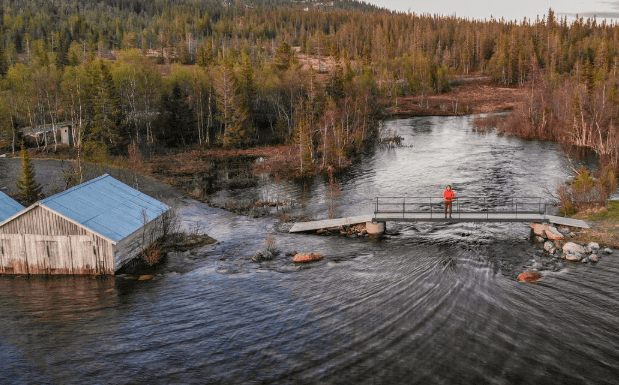
After days of rain, some areas of northern England experience a specific type of gray. Rivers, which are usually unremarkable, start to press against their banks, fields stay wet, and streets shine but are never quite dry. According to reports from the last few years, these incidents are becoming less uncommon—not dramatic enough to consistently make headlines, but frequent enough to alter expectations. The weather in the UK over the next five years may not always be extreme, but it will be characterized more and more by patterns that seem slightly out of step with the past.
There is a consistent trend in climate data. The nation is already seeing rising temperatures and changing rainfall patterns, according to governmental and advisory organizations like the Climate Change Committee. Summers are trending hotter and occasionally unexpectedly dry, while winters are getting wetter and frequently bringing heavy downpours over brief periods of time. Flood warnings in February and hosepipe bans by July may seem contradictory, but the basic principle is simple: warmer air retains more moisture and releases it unevenly.
| Category | Details |
|---|---|
| Country | United Kingdom |
| Key Authority | Environment Agency |
| Climate Oversight | Climate Change Committee |
| Current Flood Risk | ~6.3 million properties at risk in England |
| Projected Risk | Up to 8 million properties by 2050 |
| Economic Impact | ~£2.2 billion annual flooding cost |
| Climate Trend | Warmer, wetter winters; hotter, drier summers |
| References | https://www.gov.uk | https://www.theccc.org.uk | https://www.theguardian.com |
The main topic of discussion is flood risk. Approximately 6.3 million properties in England are currently at risk of flooding due to surface water, rivers, or the sea, according to estimates from the Environment Agency. In the upcoming decades, that number is anticipated to increase dramatically. The geography is just as striking as the scale. Flood risk is no longer limited to obvious riverbanks or coastal areas; urban areas are more susceptible to flash flooding following heavy rainfall due to their paved surfaces and poor drainage.
Infrastructure seems to be undergoing covert testing. After storms, rail lines buckle in the heat and remain submerged. Roads are expected to withstand new extremes because they were built for a different climate baseline. According to reports, a large percentage of transportation networks are already located in flood-prone areas, which raises concerns about their long-term resilience. It’s possible that over the next five years, there won’t be a catastrophic failure but rather a gradual build-up of disruptions—repairs, delays, and increased maintenance costs—that will gradually change how people live their daily lives.
The economic aspect is equally important but more difficult to observe in real time. According to estimates, flooding alone costs the UK about £2.2 billion a year, which includes infrastructure, business, and residential damage. Over time, broader climate impacts may have a greater impact on national output, according to studies from organizations like the London School of Economics. A subtle change is taking place here: investors, insurers, and policymakers are now compelled to factor climate risk into their decisions rather than viewing it as an environmental concern.
This change is already apparent in some industries. As a result of a reevaluation of risk, insurance rates in flood-prone areas have been increasing, sometimes dramatically. Agriculture is also adjusting; the difficulties that lie ahead are hinted at by fields that have not been harvested due to prolonged rain in recent seasons. Observing these trends gives the impression that adaptation is occurring unevenly, with some communities remaining more vulnerable and some sectors advancing more quickly than others.
However, in theory, the UK is not unprepared. Climate adaptation plans have been described in policy documents, forecasting systems have been enhanced, and flood defenses have been increased. Implementation is the problem, as multiple reports indicate. Progress seems to be gradual, sometimes disjointed, and possibly not keeping up with the magnitude of change. Even within the next ten years, it’s still unclear if the current efforts will be sufficient to mitigate the risks.
Another growing issue in the UK is heat, which is frequently overshadowed by flooding. A preview of what more frequent heatwaves might look like was provided by the record-breaking temperatures of 2022, which crossed 40°C for the first time. There were indications of stress in hospitals, transit networks, and even office buildings. Such occurrences might not be yearly in the upcoming years, but they are unlikely to stay uncommon.
Interestingly, public opinion appears to lag behind the data. Even though surveys indicate that people are becoming more conscious of climate change, people’s perceptions of risk are still influenced by their daily experiences with the weather. Concerns brought on by a wet winter can be swiftly allayed by a dry spring. Even though the underlying trends persist, this variability may make it more difficult to develop steady momentum around adaptation.
It’s difficult to ignore how the tone of the conversation has changed. Sea levels by 2100 and temperature increases over decades were once the main predictions used to frame climate change in the UK. The focus is now more immediate and closer. Long-term projections occasionally didn’t feel as relevant as the next five years.
What is revealed is a multi-layered story rather than a single one. A nation adapting to a climate that no longer behaves quite as predicted, sometimes gradually, sometimes reactively. The weather itself may still appear familiar on the surface—rain, sun, wind—but the underlying patterns are shifting, posing issues that go beyond meteorology to include everyday life, infrastructure, and economics.
