

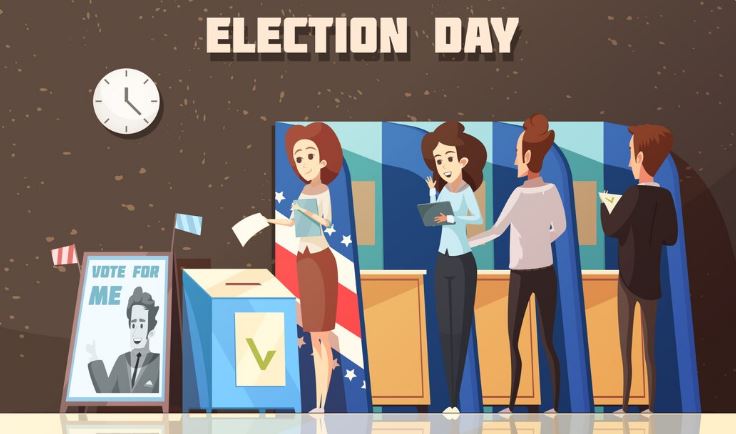
A woman at a Leeds polling place folded her ballot with a distinct sense of finality. She informed the volunteer at the door that she wasn’t actually voting for anyone. Her vote was against. And as she turned to leave, she gave a small smile. It was not a contented grin. It was a person’s smile conveying a message.
Voters are discreetly repurposing their ballots throughout Britain and many other democracies with comparable systems. Not to back up idealistic ideas or reliable leaders, but to make a statement. Frequently, that signal indicates: “Not you. Never again.
| Topic | Details |
|---|---|
| Central Shift | More voters using their ballot to punish, not promote, political parties |
| Voting Behavior | Driven by disillusionment, tactical defiance, and lack of party loyalty |
| Political Impact | Traditional parties face growing disruption from minor party and protest votes |
| Electoral Systems | Especially prominent in first-past-the-post systems like the UK and US |
| Emotional Driver | Frustration, betrayal, and strategic rebellion rather than apathy |
They are sometimes derisively referred to as “spoiler voters.” However, the label is starting to seem dated. This goes beyond fringe candidates attempting to gain ground. It’s about an increasing number of people voting to block rather than to build.
Additionally, their influence is growing, particularly in terms of changing the tactics of mainstream parties that previously ignored these voters.
Voting with spoilers was once thought to be pointless and unimportant. That isn’t true anymore. Small changes in voter loyalty have tipped national elections, overthrown local councils, and upset “safe” constituencies in recent elections. Even though they hardly ever win seats, minor parties—once dismissed as background noise—are increasingly influencing the tenor and intensity of political discussions.
This type of ballot is not wasted for the voter. The shot is a warning.
Last year, during a quiet discussion about housing at a community forum in Sheffield, a courteous, grey-haired man spoke up. He claimed that he no longer casts his vote “to support.” He casts his vote “to punish.” There was no gasp in the room. A number of them nodded.
I remember that moment because it was normal, not because it was dramatic. The atmosphere was concentrated rather than ferocious.
Voters aren’t always upset about spoilers. A lot of them are remarkably methodical. They are familiar with the system. They are aware of the voting process. Additionally, they are making the decision to break the patterns they used to follow. Not because they anticipate a better winner. However, because they want to lose to someone worse.
This change is about leverage rather than just political disillusionment. Voters can send a stronger message than silence or abstention ever could by strategically supporting a candidate with little chance of winning.
Sometimes they support hyper-local parties, Greens, or independents. In others, they are purposefully selecting write-ins or spoiling their ballot. Denying their vote to a party they feel has failed is the fundamental purpose of every act.
When you don’t feel represented, it’s an especially effective way to be heard. And it’s becoming more widespread, particularly among people who used to feel forced to choose between “the lesser evil.”
And that phrase is getting old. Voters are increasingly rejecting the binary option outright.
It’s interesting to note that this behavior has led to a form of grassroots accountability. Even if there are no seat losses as a result of complacency, parties now have to deal with the fallout. Drop-offs, defections, and the gradual deterioration of devoted bases are examples of how they manifest.
In response, campaigns have changed their tone. More candidates have been pleading to avoid being held accountable for the mistakes of their predecessors and warning of “split votes.” The language has become almost pleading and defensive. The campaign slogan, “Don’t let the perfect be the enemy of the good,” is repeated. However, that reasoning is no longer widely accepted.
Because “good enough” no longer qualifies as good for many.
A thirtysomething woman told me that she voted for a candidate she had never heard speak, just to express her disapproval of the major party she had previously canvassed for. She described it as “like changing your route home.” “A flawless detour is not necessary. Simply put, you must cease driving through the chaos.
The comparison was strangely appropriate. Voters are not gullible, spoiler alert. They don’t expect miracles. Any change away from politics as usual is what they’re hoping for.
The obvious difference now is how purposeful it is. These voters are not unintentionally drifting away. With their eyes open and their ballots marked with purpose, they are leaving on purpose.
They are especially potent because of this.
Without yelling, they are influencing public discourse. They are not organizing; they are just shifting margins. Politicians are being reminded that involvement does not always equate to support.
This is a moment of reckoning for the major parties. Nowadays, loyalty is not a given. Once lost, trust is difficult to regain.
However, there is a potential for the future within this disruption. Parties have an opportunity to reconstruct something more credible if they take it seriously and view these voters as feedback rather than threats. Voters are not disinterested in spoilers. On the contrary. In many instances, they are listening intently. They care, which is why their disapproval is so acute.
It serves as a reminder that democracy depends on more than just votes; it also depends on the significance of those votes. And more and more of them are currently saying, “You need to do better.”
How each party chooses to listen will determine what happens next. or if they even do it.
Because chaos isn’t what spoiler voters are looking for. They are requesting a change. And they’re using the ballot box, which is the most practical and peaceful way they can do it.
